Workshop Pre-Session Brief

We need your hardest problems

Send us 1–2 R&D problems your team is stuck on.


We’ll systematically search across nature, science, industry, DIY, and several other domains for analogical inspirations and develop them into concrete solution concepts tailored to your specific problem.

You’ll get 50+ concrete solution concepts, each with feasibility analysis, prior art, risks, and suggested validation experiments — ready for your team to evaluate in the workshop.

Analogical Engines Carnegie Mellon University CMU Human-Computer Interaction Institute

History's greatest breakthroughs have come from
unexpected analogies across distant fields.
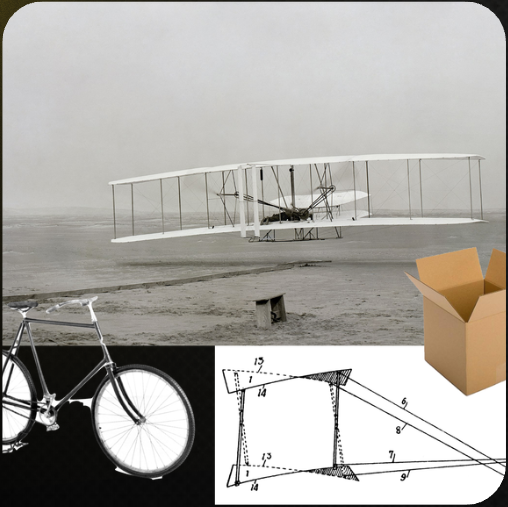
Wright Brothers: bicycle chain mechanics inspired wing warping for controlled flight

Wright Brothers, 1903

Bicycle balance intuition → wing warping for controlled flight

Eiji Nakatsu: kingfisher beak shape inspired the Shinkansen bullet train nose

Eiji Nakatsu, 1994

Kingfisher beak shape → Shinkansen bullet train nose
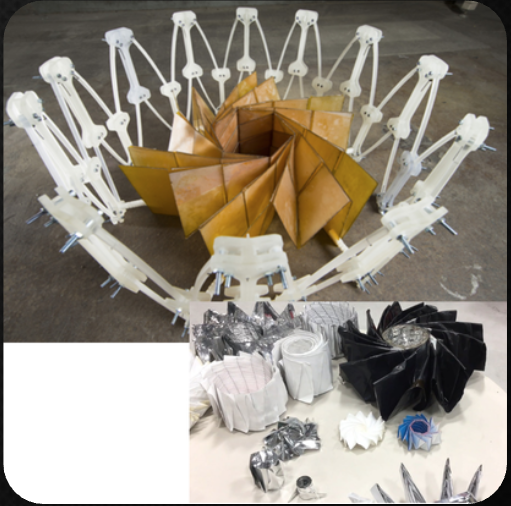
NASA JPL: origami folding patterns inspired compact solar array deployment

NASA JPL, 2014

Origami fold patterns → deployable solar arrays

…But finding these analogies has always relied on serendipity.

The problem & our approach

Why current approaches fall short

Approach The problem How we solve it
Brainstorming Bounded by who’s in the room.
Depth creates fixation The best analogy for your polymer problem might come from marine biology or origami — and no one at the whiteboard is going to find it.
We search far beyond the problem domain Our agents systematically search across biology, aerospace, manufacturing, crafts, and hundreds of other fields.
Literature search Finds work that looks like yours.
Misses structural similarity Keyword search will never connect a pitcher plant to a chemical-resistant coating — the surface terms share nothing.
We match on how things work, not what they’re called We search for the same purpose achieved through different mechanisms. That’s how you find a pitcher plant when you’re looking for a chemical barrier.
LLMs Predict the most probable response, not the most creative.
They converge on the plausible Ideas aren’t grounded in real systems — and mode collapse plus shared models means everyone generates the same ones.
We ground every concept in evidence Every concept starts from a real mechanism in our library of thousands — matched by structural analogy. We validate transferability, assess feasibility, and refine for your constraints.
The research

Validated scientifically

15+ peer-reviewed papers 4 filed patents
2x higher-quality ideas Hope, Chan, Kittur & Shahaf
KDD 2017
5x creative adaptation Kang et al.
TOCHI 2022
Better outcomes vs ChatGPT Kang et al.
CHI 2025

As seen in
NPR Axios The Washington Post Forbes GeekWire
Read our white paper →
Example Problem

Chemical-resistant soft-touch surfaces

Soft-touch materials in consumer products degrade when exposed to sunscreen, cosmetics, and personal-care formulations — swelling, stickiness, discoloration. How do you keep a surface soft and premium while making it chemically impervious?

A classic materials trade-off: soft materials absorb chemicals, resistant materials feel hard and cheap. Every approach sacrifices tactile quality for durability or vice versa.

What the system found

From pitcher plant to protective polymer
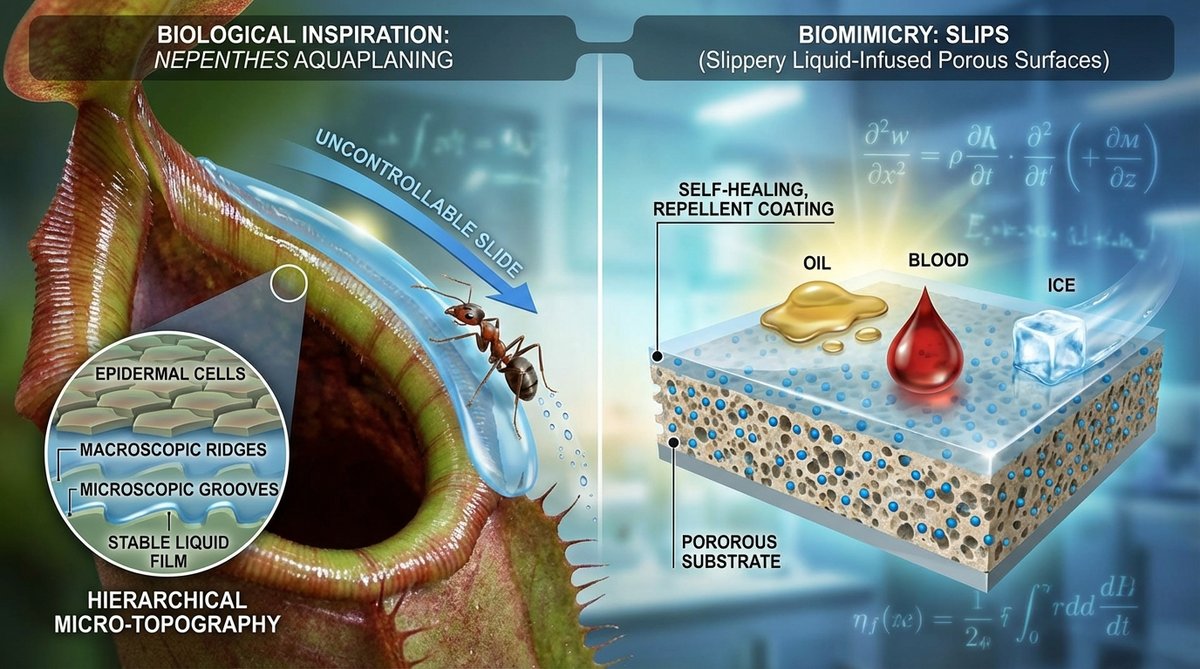
Inspiration Nepenthes Pitcher Plant Pitcher plant peristome traps a liquid film via micro-texture, causing insects to aquaplane

Micro-grooves lock a water film via capillary forces.
Insects never touch the solid—they aquaplane into the trap.
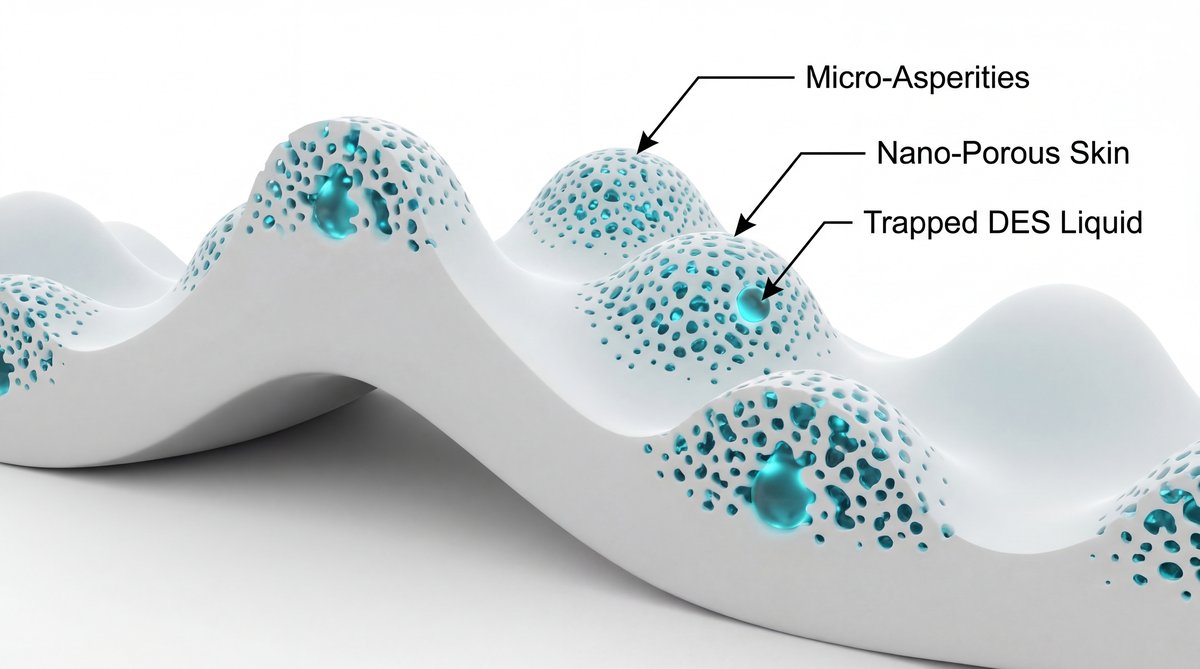
Solution concept Capillary-Locked Barrier Micro-bumps with nano-porous skin trapping a protective liquid barrier inside

Nano-porous micro-bumps trap a bio-based liquid barrier that repels chemicals on contact. Bump tips stay dry and velvety. The same liquid-barrier principle already prevents blood clotting in medical catheters for 8+ hours without blood thinners.

One of 50+ solution concepts generated for this problem
Each with feasibility analysis, prior art review, risks, and validation experiments

Before the workshop

What we need from you

The system runs asynchronously. Please submit 1–2 technical challenges per team ahead of time.

The challenge — What are you trying to solve? Focus on function, not material or chemistry. (2–4 sentences)
What makes it hard? — What have you tried? Where do existing approaches fall short?
What does success look like? — Novel directions? Concrete concepts? A mapped design space?
Constraints — Cost targets, regulations, manufacturing compatibility, sustainability mandates.
What you've already explored — So we focus on directions that are genuinely new to you.
Guidance

What makes a good problem?

Describe what the solution needs to do, not what material it should use.

Specific & functional
"We need a protective coating for wind turbine blade leading edges that withstands rain erosion for 5+ years, is field-repairable, and uses 60%+ non-fossil carbon sources."
"We need packaging that passively regulates moisture and gas exchange to keep produce fresh for 2–4 weeks in a cold chain, and is compostable."
Too vague
"We want to improve our polyurethane coatings."
"We need better packaging solutions."

Improve how? For what application? What constraints? The more specific the function, the better the analogies we can find.

The process

What to expect

Before You submit problems 1–2 challenges per team, with context on constraints and what you’ve already tried.
We prepare We build solution concepts Search hundreds of domains for analogies, then turn the best into concrete, de-risked concepts for your problem.
Together Workshop (~3 hours) Your team reviews a portfolio of solutions and scenarios, validates ideas, riffs together, and flags what to explore further.
After Your shortlist, delivered The concepts you marked as interesting, with feasibility analysis, prior art, and suggested next steps.

Our goal is to systematically expand the solution space you’re considering by searching hundreds of cross-domain analogies and developing the most promising into concrete, evidence-backed solution concepts your team can evaluate and build on.

Next step

Let's get started


Submit your problems to get started

Analogical Engines Carnegie Mellon University CMU Human-Computer Interaction Institute